
Journal
Louis Vuitton Takes the Road with Singer
When fashion, engineering and the art of preservation meet
August 2026 · The Atelier Edit
Louis Vuitton and Singer have reimagined two classic Porsche 911s — bringing together the traditions of travel, automotive engineering and exceptional handcraft.
Unveiled during Monterey Car Week in August 2026, the project began with a deceptively simple request: Singer approached Louis Vuitton to create a dashboard clock. That single object became the starting point for a far more ambitious collaboration, extending into the cars’ materials, interiors, luggage and accompanying wardrobes.
The result is not conventional automotive branding. It is a study in what can happen when two distinct design languages are allowed to influence one another.
Two interpretations of an icon
The collaboration comprises two cars, each built around the architecture of a classic Porsche 911 and reimagined by Singer.
The Classic
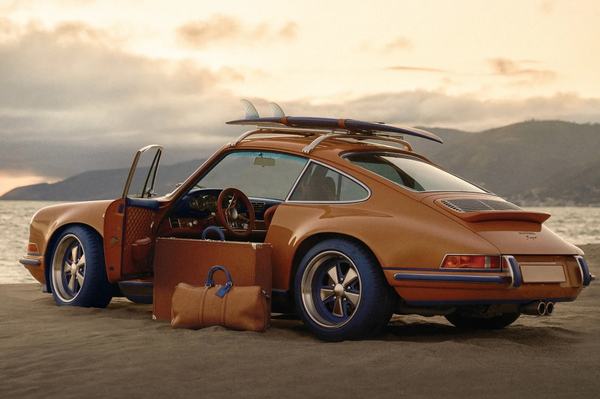
The first, the Porsche 911 Reimagined by Singer – Classic, is a naturally aspirated coupé finished in an expressive combination of saffron, cobalt blue and yellow. Its 4.0-litre flat-six produces 420 horsepower and is paired with a six-speed manual transmission.
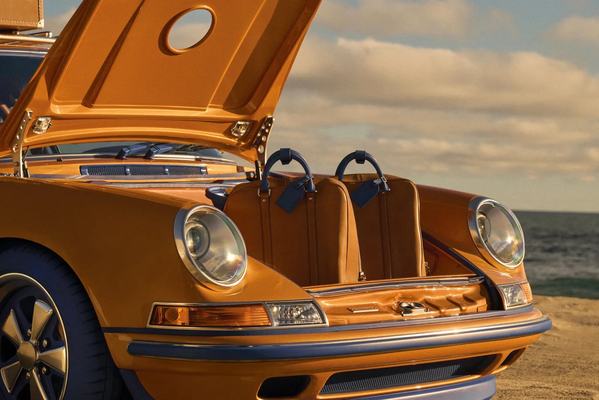
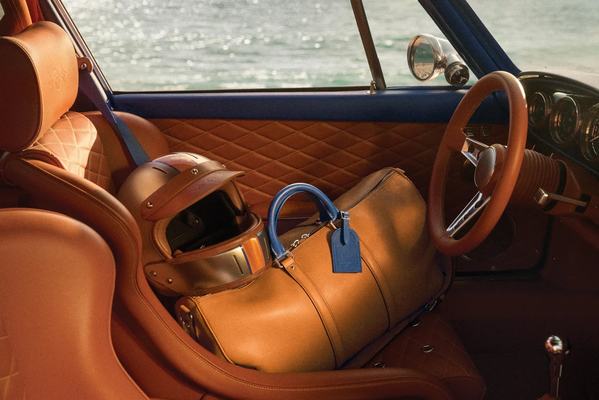
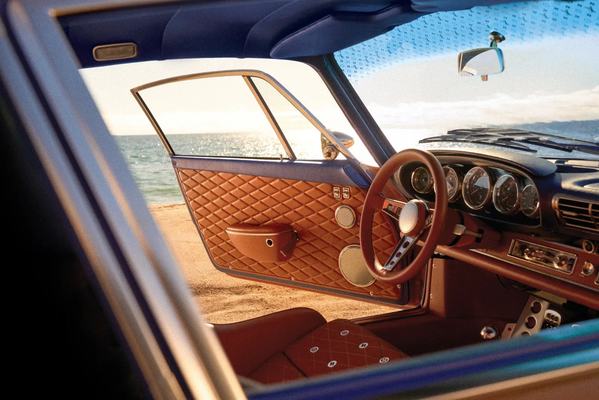
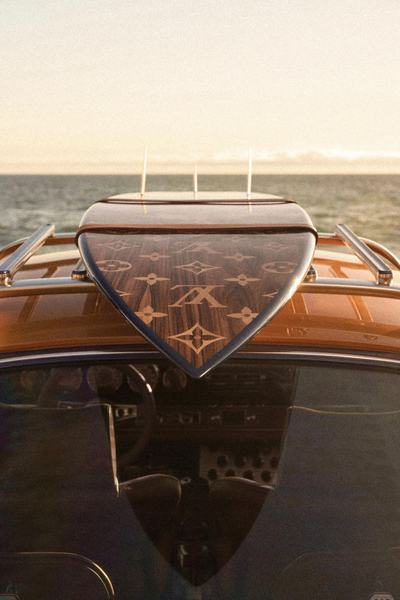
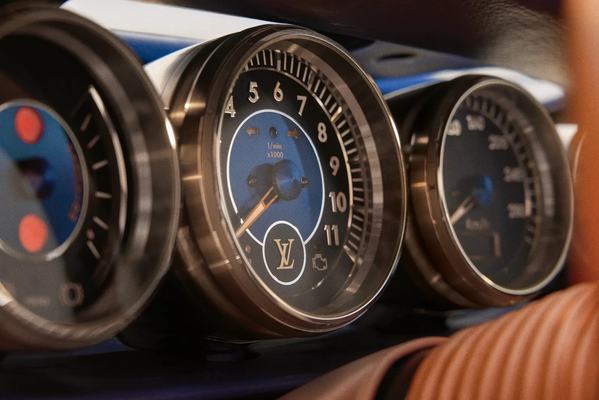
Inside, Louis Vuitton’s codes appear through colour, leatherwork and carefully resolved details rather than a single dominant motif. A removable mechanical Tambour clock sits within the dashboard, accompanied by specially designed instruments and a fitted collection of luggage. A roof rack carries bespoke skis and a surfboard — turning the car into a complete expression of the Maison’s enduring Art of Travel philosophy.

The Turbo Cabriolet
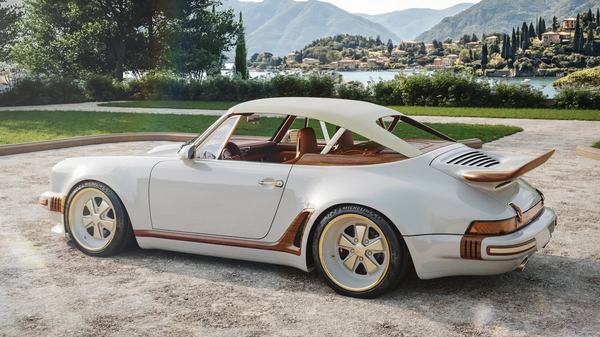
The second is a Porsche 911 Reimagined by Singer – Classic Turbo Cabriolet, developed with Louis Vuitton Women’s Artistic Director Nicolas Ghesquière.
Finished in Calcaire Lutétien — a pale shade inspired by the limestone architecture of Paris — the car takes a quieter, more architectural approach. Warm wood, light leather and gold-toned details reference both Parisian interiors and the polished surfaces of classic motorboats.
Beneath this composed exterior sits a twin-turbocharged 3.8-litre flat-six producing 510 horsepower. The juxtaposition is compelling: restrained elegance surrounding a deeply mechanical, highly capable object.
Both cars are accompanied by fitted Louis Vuitton luggage and purpose-designed travel pieces. The Turbo Cabriolet extends into a complete personal world, including a tailored silk driving suit, leather jacket, gloves, helmet, sunglasses and shoes.
More than a monogram
Luxury collaborations can often feel like exercises in visibility: a recognisable name placed onto an already desirable object.
This project feels different.
Singer is known for taking existing Porsche 911s and rebuilding them through a process that respects their original character while reconsidering almost every component. Louis Vuitton approaches its trunks, watches and leather goods with a comparable attention to function, material and longevity.
The connection is therefore not simply aesthetic. Both houses work with the idea that an object can retain its identity while being carefully reinterpreted.
The Tambour clock captures this particularly well. It was designed not merely as decoration, but as a functioning instrument integrated into the architecture of the car. In the Classic, it can be removed from the dashboard and displayed independently — allowing one crafted object to move between travel, timekeeping and interior design.
The new meaning of collectability
The most compelling luxury objects are rarely defined by price alone.
They become collectible because of the ideas they contain: the people involved, the moment in which they were created, the techniques used and the unlikely meeting of disciplines that may never occur in quite the same way again.
These two cars sit at the intersection of automotive history, contemporary fashion and traditional craftsmanship. They are not pristine reproductions of the past, nor are they attempts to erase it. The original 911 remains recognisable beneath every intervention.
That tension is what gives the project its relevance.
At a time when luxury is often associated with constant novelty, Louis Vuitton and Singer have chosen to begin with something that already exists — then preserve, refine and reimagine it.
It is an approach closely aligned with the philosophy of the archive: that exceptional design does not lose its value when its original moment passes. In the right hands, it acquires another chapter.
The Louis Vuitton and Singer collaboration is ultimately about more than two extraordinary cars. It proposes a modern form of luxury built around continuity rather than replacement.
Not nostalgia.
Evolution.
Exceptional objects, reimagined with intent.